An old but endless discussion I: Virtual synths vs. Hardware synths

Updated: May 23, 2021

Within the electronic music world, one question is guaranteed to stir up controversy:
“Which do you prefer, virtual sound or hardware sound?”
I know artists who would literally travel to another country just to get particular hardware gear, and spend thousands of euros on the fees to bring it back. Hardware enthusiasts often describe hardware-generated sound as soulful, unique and irreplaceable compared to virtual sound.
On the opposite end of the spectrum are artists who hold the view that if your sound design skills are strong enough and you have the right DAW and plugins, you can accurately recreate any sound that hardware synths make. They might add that if any subtle differences do exist, anyone but an obsessive perfectionist can surely ignore them.
For a long time, when this question was posed to me, I couldn’t give a definitive answer. Although sometimes I could clearly hear the difference between virtual and hardware sounds, I couldn’t be sure that the hardware sound truly couldn’t be recreated on a DAW. Perhaps it only seemed impossible to me because my sound design skills were inadequate.
Furthermore, there were times when a track sounded really satisfying to me, so I assumed it must be a hardware creation, only to learned that it was born of software.
Now, after an entire year of exploring this question, I believe that I have achieved a stable perspective on the matter. Here are some thoughts from my own experience.
The loop in my track “endless spells” plays a vital role in the piece. It runs from the beginning to the end of the track, and its subtle changes along the way form the essence of the music.
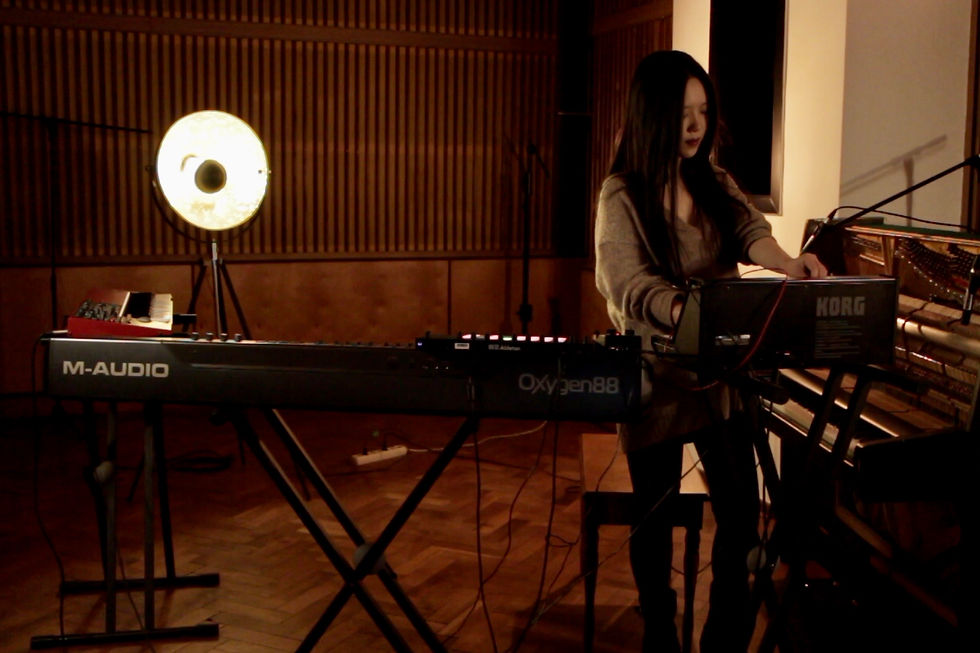
Because I planned from the beginning to make it possible to perform this track live, I had to figure out a performance setup as I developed it. The key question was whether to use virtual sound and adjust the parameters using Ableton Push, or send the midi notes through a hardware synth and adjust everything there.
I gave my best effort to both methods. I first spent hours and hours designing the best sound I could get out of an Ableton analog. Then I used the same parameters in a Korg MS-20 mini for comparison.
The results are quite distinct. Even with the same parameter adjustments, the two sounds have a very different feel and sense to them, and I found myself leaning toward the Korg version.
the sound design of Analog in Ableton
the sound design by a Korg ms-20 mini
This rule doesn’t apply to everything, though. In the same piece, I designed certain FX with the same analog parameters, using the loudest noise and lowest pitch. I figured that with the same parameters, the sound would sound more satisfying on the Korg MS-20 mini. Instead, it was quite obvious that the Korg creation just didn’t work, I guess mainly because of the low pitch.
Many will consider this a boring answer, but personally, I really see the virtual vs. hardware comparison as a 50-50 thing. And sometimes, 1 + 1 is more than 2.
In the final version of “endless spells”, I used a combination of virtual and hardware sounds. I believe that this blend sounds better than either one individually.


Comments